Quick answer
For most homes, the best type of carpet cleaning is hot water extraction, usually called steam cleaning. It rinses dirt out of the carpet and extracts it, leaving little residue. Shampooing can loosen heavy soil but often leaves sticky residue that attracts dirt again.
Steam cleaning and shampooing are the two methods people ask us about most. Here's how each one works, where each falls short, and which suits your carpet.
What Is Steam Cleaning?
"Steam cleaning" is the everyday name for hot water extraction. Despite the name, it doesn't use steam. Heated water and a cleaning solution matched to the fibre are rinsed into the carpet, then pulled back out with strong suction, taking the loosened soil with it.
Pros
- Cleans deep into the pile, not just the surface.
- Rinses soil out instead of leaving it behind.
- Leaves little residue, so carpet stays clean for longer.
- Works for most carpets, including wool when the solution, heat and moisture are controlled.
Cons
- Needs powerful equipment to extract the water properly. Weak hire machines can leave carpet too wet.
- Stubborn stains need pre-treatment first.
- Carpet needs time to dry, usually some hours depending on airflow and weather.
What Is Carpet Shampooing?
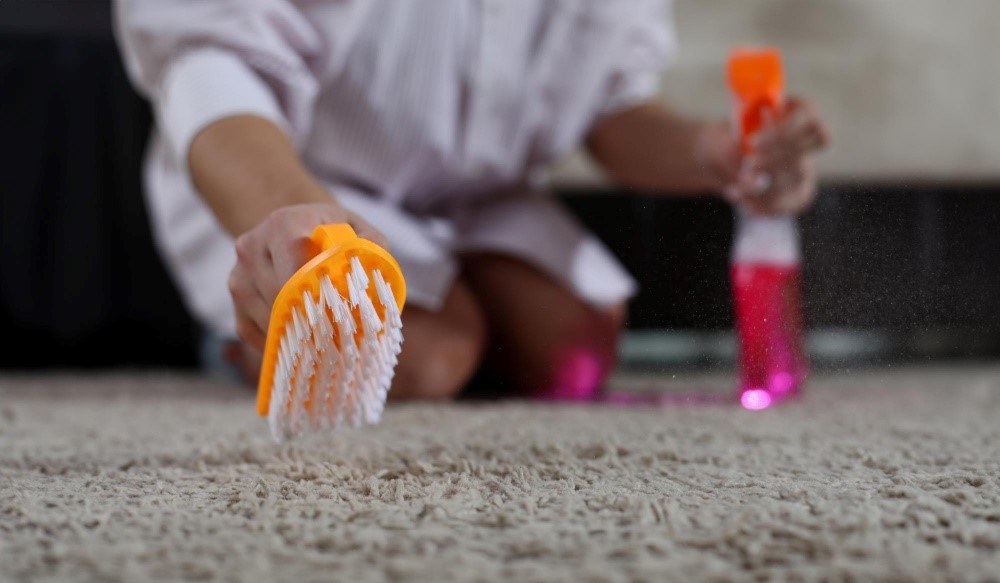
Shampooing works a foaming detergent into the carpet with a rotary brush. The foam loosens soil, which is then left to dry and vacuumed up, or partly extracted.
Pros
- The scrubbing action can loosen heavy, ground-in soil.
- Machines are widely available to hire.
Cons
- Detergent residue often stays in the pile. It's sticky, so carpet gets dirty again faster.
- Carpet can stay damp for a long time if too much solution is used, which risks the underlay and musty smells.
- Brushing can fuzz or distort some carpet piles.
Steam Cleaning vs Shampooing Carpets: Side by Side
| Steam cleaning (hot water extraction) | Shampooing | |
|---|---|---|
| How it cleans | Rinses and extracts soil | Foam loosens soil, which is vacuumed up |
| Cleaning depth | Deep, through the pile | Mostly upper pile |
| Residue left behind | Low | Often high |
| Re-soiling | Slower | Faster, because residue attracts dirt |
| Drying | Some hours, depending on airflow and extraction | Often longer if over-wet |
| Wool carpet | Suitable with wool-safe solution and controlled heat | Risk of residue and fuzzing |
| Best for | Most homes, regular deep cleans | Occasional heavy soil, followed by thorough rinsing |
Other Carpet Cleaning Methods
- Low-moisture or encapsulation cleaning: a cleaning solution dries into crystals that are vacuumed away. It dries fast, so it suits offices between deep cleans, but it doesn't rinse out deep soil.
- Dry powder cleaning: an absorbent powder is brushed in and vacuumed up. Useful where carpet can't get wet, but it's a lighter clean.
- Bonnet cleaning: a spinning pad cleans the top of the pile. It brightens appearance quickly but doesn't clean deep down.
The Best Type of Carpet Cleaning for Your Home
For most homes, hot water extraction is the best carpet cleaning method. It's the most thorough, it leaves the least residue, and it suits both wool and synthetic carpet when it's done properly.
A good cleaner will still check your carpet first. Fibre type, how dirty it is, stains and how fast you need the room back all affect the approach. That's why every job we do starts with a pre-inspection.
DIY Hire Machine or Professional Clean?
Hire machines are fine for a quick refresh, but they have less suction than professional equipment, so more water is left behind. The most common DIY problems are over-wetting, too much detergent and slow drying. Our carpet cleaning tips cover how to use a hire machine safely.
A professional clean extracts more water and more soil, and adjusts the solution and heat to your carpet.
Book a Professional Steam Clean
We're IICRC-certified carpet cleaners in Hamilton and the Waikato. Our carpet steam cleaning starts from $190 incl. GST, and tougher marks are covered by our guaranteed stain treatment.